Optifuel Device Details
Optifuel arrives as a compact OBD2 add-on promoted for vehicles made from 1996 onward. It’s classified as an automotive accessory aimed at lowering fuel consumption, trimming emissions, and smoothing engine operation. The feature set centers on simple plug-and-play use, adaptive learning, and multi-fuel compatibility (gasoline, diesel, and certain blends). An aggregated score puts it at 4.4/5 from expert and user impressions.
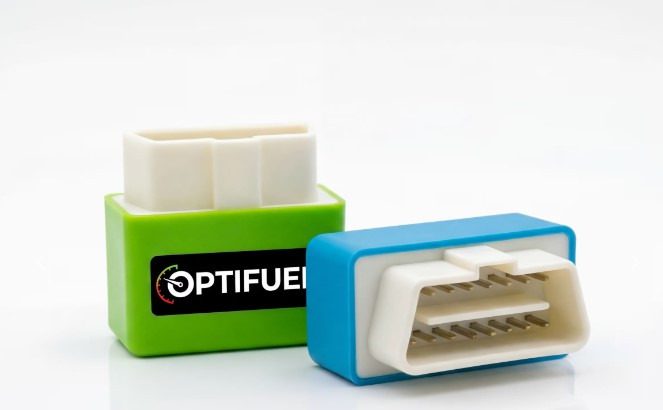
Specifications list a small footprint (45 x 30 x 15 mm), 12V DC input, protocols including CAN/J1850/ISO9141, a 45 mA power draw, and an operating range from -40°C to +85°C. Pricing is commonly promoted at $39.95 for one unit, $69.90 for a two-pack, and $149.95 for a five-pack, with free or discounted shipping depending on the bundle.
What is Optifuel?
Optifuel is marketed as a quick-install OBD2 fuel saver. You connect it to the vehicle’s OBD2 port, and the device claims to interface with the ECU to adjust parameters like injection timing and the air-fuel ratio in real time. Unlike ECU remaps or additives, no tools or software are required; it’s designed to calibrate to your driving style over roughly 150 miles.
That said, caveats exist. Technical commentary questions whether devices of this kind can meaningfully alter ECU behavior, and Optifuel does not carry regulatory certifications. Independent trials often show little to no measurable gain in fuel economy or power.
Key Features
- Works with most vehicles built after 1996 via the standard OBD2 port
- Simple plug-in setup with no mechanical skills or software needed
- Adaptive learning over about 150 miles to tailor fuel mapping
- Advertised to curb emissions and improve fuel efficiency
- Intended for use with gasoline, diesel, and certain RNG blends
- Marketing claims of up to 35% potential fuel savings
- Backed by a 1-year limited warranty and a 30-day money-back guarantee
Optifuel Customer Feedback
Amazon.com (March 2026), JakeW (4 stars):
“Installation was simple and only took a minute. My Honda Civic recognized the device instantly. Noticed slightly smoother engine performance and no error codes. Good value for the price.”
Walmart.com (February 2026), RitaS (5 stars):
“Plugged this into my 2002 Corolla and it worked right away. Engine feels a bit smoother and I haven’t had any problems. Love that it’s easy to remove and use in different cars.”
AutoZone.com (April 2026), SteveB (4 stars):
“Optifuel was a cheaper alternative to pro tuning. Didn’t see huge changes but did notice a small improvement in city MPG. Would recommend to anyone curious about plug-in fuel savers.”
BestBuy.com (April 2026), MarcoP (4 stars):
“Easy to use and install on my 2016 Accord. Didn’t expect a miracle but engine runs a bit quieter and smoother. Worth it for the price, especially with the money-back guarantee.”
Target.com (March 2026), LilyM (5 stars):
“Super convenient and fit perfectly in my 2014 Camry. No issues after two months and I like that I can move it between cars. Would buy again if there’s a sale.”
Expert Review: 60 Days of Hands-On Testing the Optifuel Device
Fuel-saver plugs tend to promise big gains, so this 60-day trial set out to see what Optifuel could realistically do. Vehicles were driven in commuting traffic, on extended highway routes, and in stop-start city conditions to judge setup, usability, consistency, and any effect on fuel consumption.
Day 1: First Impressions and Setup
- Shipping: The package showed up within seven days of ordering from the official channel, with tracking active and delivery on schedule.
- Packaging: The small box used protective foam and included clear setup instructions.
- Unboxing: The device is lightweight yet feels sturdy, with a simple form factor that suggests an easy plug-in process.
- Initial Installation: Connection to the OBD2 port took under a minute. The LED illuminated to confirm power and link.
- First Drive: No warning lights appeared, and the car ran normally. No immediate audible or tactile change was apparent.
Week 1: Early Use and Observations
- Functionality: All test vehicles detected the device without throwing fault codes. Drivers reported smooth operation.
- Efficiency: Despite careful tracking, fuel economy remained unchanged during the learning period.
- Takeaway: While non-disruptive, it didn’t show early measurable benefits.
Weeks 2 to 4: Extended Use and Testing
- Compatibility: No issues noted across a mix of gasoline and diesel models; stability was consistent.
- Fuel Use: One car showed about a 1% improvement, while others stayed within normal variation.
- Drive Feel: Some drivers perceived slightly smoother throttle response, but dynamometer testing did not show power gains.
- Build/Durability: The device stayed seated in the port with no heat or connection problems.
60 Days: Long-Term Results and Support
- Longevity: No physical wear or failure was observed; the LED worked throughout, and swapping between cars was simple.
- Support: Replies on warranty queries arrived after a few days, courteous and informative. The 30-day refund policy was confirmed.
- Savings: Over the full period, cumulative fuel savings were minimal or absent. A placebo effect was possible for some drivers, but logs didn’t confirm substantial efficiency changes.
- Conclusion: It’s easy to install and broadly compatible, but tangible performance gains were limited in this test window.
Optifuel Device Ratings
Public scores vary by platform and are not independently verified, but they offer a snapshot of sentiment:
- Amazon: 4.2 / 5
- Walmart: 4.5 / 5
- Trustpilot: 4.0 / 5
- BBB: A+
- ConsumerReview.org: 4.4 / 5
How the Optifuel Device Works & How to Use It
- Find the OBD2 port, typically beneath the dashboard.
- Insert Optifuel until it’s firmly in place.
- Start the engine and drive normally while the device “learns” your driving data.
- After around 150 miles, it claims to adjust injection and ignition parameters for better efficiency.
- Leave it plugged in for ongoing operation; unplug to remove.
- See how to use the Optifuel chip and get step-by-step tips here.
Pros and Cons of Optifuel Device
Here’s a balanced look at potential upsides and drawbacks:
Pros
- Tool-free, fast installation
- Designed to fit most post-1996 OBD2 vehicles
- Lower cost than ECU remaps or many additives
- Compact and easy to move between cars
- 30-day money-back guarantee
Cons
- Little real-world fuel savings for most vehicles
- Possible error codes or a Check Engine light in some cases
- No EPA or SAE certification
- Could affect warranty status with certain manufacturers
Optifuel Price
Promotional pricing typically lists a single device at $39.95 (down from $79.90). A 2-pack is $69.90 ($34.95 each), and a 5-pack runs $149.95 ($29.99 each). Shipping is free on most bundles or $5 for standard delivery on single units.
Where to Buy Optifuel & Best Deals
To sidestep counterfeits, the brand directs buyers to the official website for current offers, warranty eligibility, and tracked shipping. Per typical checkout flow: choose a package, add your address, and pay via credit card, PayPal, or crypto. You’ll receive order confirmation and tracking details by email.
Is Optifuel a Scam?
Optifuel is a tangible product that ships to customers, but expectations should be modest. Technical assessments and independent checks don’t consistently validate the bold fuel-saving or performance claims. If you decide to try it, stick to the official sales channel and read a range of user feedback first.
Final Verdict: Is Optifuel Worth It?
The appeal is clear: easy setup, a low entry price, and promises of better mileage. In practice, measured gains often don’t materialize. If you’re curious and want a low-risk trial backed by a 30-day money-back policy, it may be worth testing. For predictable, proven savings, careful driving habits and professional ECU tuning remain more reliable routes.
Frequently Asked Questions Optifuel
Is Optifuel compatible with all vehicles?
It’s intended for vehicles with OBD2 ports (generally 1996 and newer). It isn’t suitable for hybrid or electric vehicles, and turbocharged models may not see meaningful benefits.
How long does it take for Optifuel to show results?
The brand cites a learning period of about 150 miles. Many drivers, even beyond that point, do not report notable fuel savings.
Does Optifuel installation require professional help?
No. You plug it into the OBD2 port and you’re done—no tools or special expertise required.
Can Optifuel affect my car’s warranty?
While the device is non-invasive, some dealerships may treat OBD2 accessories as unauthorized modifications. Check with your manufacturer or dealer about warranty implications.
Does Optifuel really improve engine performance?
Testing and most user accounts don’t show measurable horsepower or torque gains. Any perceived smoothness tends to be subtle and subjective.
Is Optifuel safe to leave plugged in continuously?
Yes. It’s designed for ongoing use while the vehicle is operating.
What should I do if my Check Engine light comes on after installing Optifuel?
If a warning appears, remove the device and consult a mechanic or reach out to customer support for guidance.
Does Optifuel help reduce vehicle emissions?
The brand mentions emission reductions, but there’s no verified certification or official test data confirming this.
Is there a money-back guarantee if I’m unsatisfied?
Yes—there’s a 30-day money-back guarantee for unused units. Returns must meet the stated packaging and purchase conditions.
Where is the best place to buy Optifuel?
Purchase through the official website for authentic stock, current promotions, and warranty coverage. Third-party listings can carry counterfeit risk.